
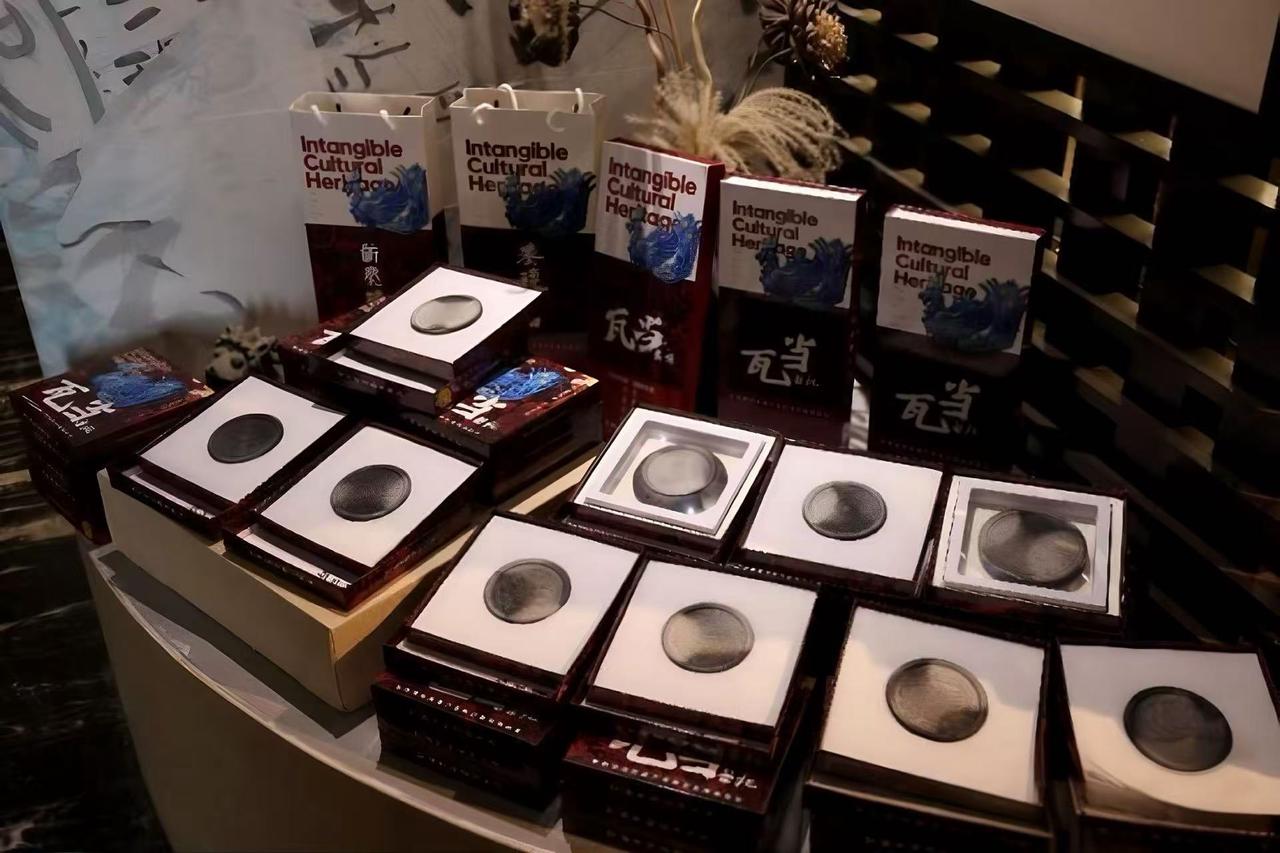
Architecture of the Qin and Han dynasties was magnificent, bold and unadorned, marking the first pinnacle of ancient Chinese construction.
Tall watchtowers, heavy stone column bases, and sprawling palaces and pavilions embodied the architectural philosophy: Only grandeur can embody imperial majesty, woven into every city wall and palace hall. Qin bricks and Han tiles, the building blocks of these monumental structures, stand as powerful testament to this ethos.

“The term ‘Qin Bricks and Han Tiles’ does not merely refer to bricks from the Qin Dynasty and tiles from the Han Dynasty. It is a special title coined by later generations to honor the glorious peak of architectural ornamentation during this era,” explained Xu Haifeng, inheritor of the traditional craft of replicating Qin bricks and Han tiles in Beilin District, Xi’an.

“My bond with Qin bricks and Han Tiles came by chance, yet it was inevitable. Over a decade ago, a friend brought me a Han brick. I was instantly captivated by its intricate, elegant patterns. The weight of millennia of history and its understated beauty transported me across a thousand years, conjuring visions of the majestic Epang Palace and sprawling Weiyang Palace. As a graduate of Xi’an Academy of Fine Arts, I possess artistic appreciation and creative skills, so I threw myself wholeheartedly into recreating Qin bricks and Han tiles without hesitation,” Xu Haifeng recounted.

Qin bricks and Han tiles are vital vessels bearing Shaanxi’s thousand-year historical culture. In Xu Haifeng’s view, these cultural treasures deserve more than silent display in museums. Contemporary people ought to draw on creative thinking to craft cultural works that resonate with modern life, allowing audiences to touch history up close and immerse themselves in Qin and Han culture—breathing vitality into Qin bricks and Han tiles in the public imagination.

Revitalizing cultural relics is no easy feat. To this end, Xu Haifeng pored over ancient texts, combed through archives, and conducted countless experiments and research trials. He eventually drew inspiration from China’s time-honored tea culture and successfully integrated Qin bricks and Han tiles with the art of tea.
He pioneered the creation of the Qin Brick Tea Tray, a well-loved functional art tea ware infused with the distinct charm of Qin and Han aesthetics, seamlessly embedding ancient culture into everyday life.

“Combining tea culture with Qin bricks and Han tiles marks a pivotal creative endeavor of mine,” Xu Haifeng shared. “Craftsmanship-wise, these functional art tea wares fully adopt the traditional techniques of Qin bricks and Han tiles—from sourcing raw materials and carving moulds for stamping patterns to shaping and refining clay bodies. Aesthetically, while preserving the timeless Qin-Han grandeur of bricks and tiles, I weave ceramic art, sculpture and tea ceremony aesthetics into each piece. The imposing spirit of the Qin and Han dynasties fuses with other art forms to radiate brand-new artistic vitality.”
His unwavering dedication to promoting Qin and Han culture and tracing the marks of time through bricks and tiles has earned him numerous accolades. In 2018, his work Black and Yellow claimed the Silver Award as a finalist at the 3rd Oriental Tea Set Competition. In 2021, his Qin Brick Tea Tray series won Silver at the regional preliminary round of the 7th Shaanxi Tourism Commodity Competition. These achievements have strengthened his resolve to carry forward the craft of Qin bricks and Han tiles, driving him to forge ahead continuously.
Qin bricks and Han tiles are brilliant, tangible evidence of the splendid architectural civilization of the Qin and Han dynasties, a dazzling gem within the treasure trove of Chinese civilization.
Weathered by centuries and spanning a thousand years, Qin bricks and Han tiles have been brought to wider audiences and cherished by more people thanks to Xu Haifeng.
He pursues innovation rooted in antiquity, navigating the profound, weighty culture of the Qin and Han dynasties to chart a path for the inheritance and development of Qin bricks and Han tiles.
As he puts it: “I was born and raised in this ancient city, carrying its blood in my veins. No matter what, I will do all I can to let more people see and use works of Qin bricks and Han tiles. I want the self-confidence of the prosperous Qin and Han eras to shine forth in Xi’an, and let Qin bricks and Han tiles—this profound cultural calling card of our ancient city—glow ever brighter across the millennia!”
Share:
Qin Hanhan Showcases Xi'an Culture on the Global Stage